The AI Safety Net: How Tech Spending is Saving Us From Trump's Tariffs
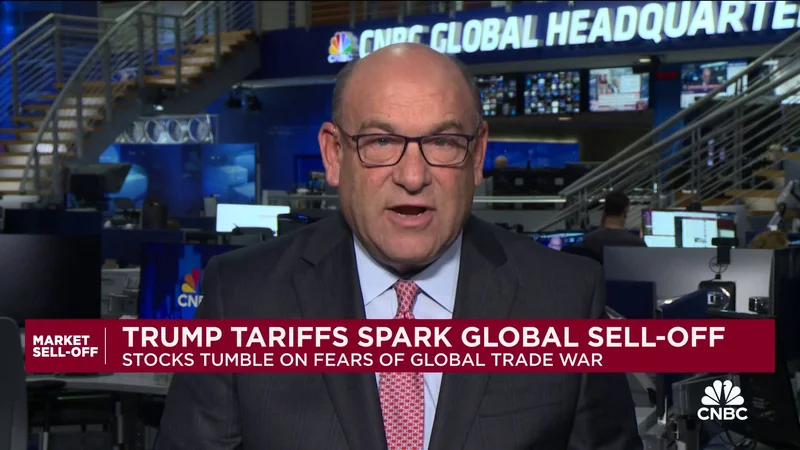
Okay, folks, buckle up, because I've got some seriously exciting news that just might restore your faith in the future. Remember those "Liberation Day" tariffs President Trump slapped on everything back in April? Economists were practically predicting the end of the world, envisioning a global trade collapse, right? Well, hold onto your hats, because the narrative is shifting, and it's all thanks to—you guessed it—artificial intelligence.
See, while everyone was focused on the doom and gloom of tariffs, something incredible was happening behind the scenes. U.S. tech giants, the likes of Amazon, Google, Meta, and Microsoft, were quietly unleashing a tidal wave of investment in AI. We're talking nearly $400 billion this year alone. And that, my friends, is not just pocket change.
The Silver Lining in the AI Cloud
Now, I know what some of you might be thinking: "Big tech? Really? Aren't they the problem?" Maybe, maybe not, but in this case, they are inadvertently—or maybe intentionally—becoming part of the solution. According to the latest figures, AI investments accounted for as much as half of U.S. gross-domestic-product growth in the first half of 2025. Half! That's like the Industrial Revolution all over again, but this time it's powered by algorithms and data centers! When I first saw these numbers, honestly, I just sat back in my chair, speechless.
Global Impact of AI Investment
This isn't just a U.S. story, either. This AI spending spree is having a ripple effect across the globe, particularly in countries that are key players in the AI supply chain. Take Taiwan, for example, the world's chip-making powerhouse. Their GDP growth forecast has jumped to a whopping 7% this year, up from 4.4% just a quarter earlier. It's a unique case, as capital expenditures on plants and equipment are expected to rise 30% this year, up from a 13% increase last year. South Korea, with its dominance in memory chips, and the Netherlands, home of chip-making equipment leader ASML, are also seeing a significant boost. Asia accounted for nearly two-thirds of global AI-related trade growth in the first half of 2025. The benefits are overwhelmingly concentrated in advanced manufacturing economies.
The Precarious Safety Net
But here's the thing: this AI boom isn't a magic bullet. While it's certainly propping up global trade and growth, the benefits are unevenly distributed, and the pain from tariffs is still very real. The WTO, for instance, while upgrading its 2025 forecast, reduced its 2026 forecast for world merchandise trade volume growth. It's like we're teetering on the edge of a cliff, with AI acting as a precarious safety net.
Government Policies Offer Additional Support
The tariff cliff might not be a foregone conclusion, however. Policies from several of the world’s biggest governments are building a safety net. Economists expect the Trump-championed One Big Beautiful Bill Act to boost the U.S. economy in the short run by extending tax cuts, while increasing the federal deficit. That could lift imports. On top of that, Germany is making a historic shift away from frugality toward spending. And Japan approved $135 billion of stimulus to boost economic growth. Such support, combined with a weak dollar and a potential Federal Reserve rate cut, means the global economy might stay on its feet in 2026, provided the AI boom doesn’t fizzle.
Trump's Influence on the Federal Reserve
Now, here's where it gets really interesting. Remember Kevin Hassett? Trump tapped him to be the next leader of the Federal Reserve. If Hassett is chosen and confirmed, Trump would gain a close ally at the top of the nation's central bank, one who could be expected to push for the president's preferred policies, including lower interest rates - something Trump has been demanding for months from the embattled current Fed chief, Jerome Powell. Trump Says He’s Picked the Next Fed Chair
Is This a Real Solution, Or Just a Band-Aid?
So, what does all of this mean? Are we out of the woods yet? Well, not exactly. The tariffs are still a major concern, and the benefits of AI are not being felt equally across the board. But the fact that this technology is having such a significant impact on the global economy is nothing short of remarkable. And while this is a boost for the world economy, we must not forget that this growth is highly concentrated in specific regions and industries. This imbalance raises ethical questions about equitable distribution and the potential for further economic disparities.
It’s a bit like the early days of the internet, isn't it? Some people got rich overnight, while others were left behind. We need to make sure that this AI revolution benefits everyone, not just a select few. What this means for us is... but more importantly, what could it mean for you?
The Future is Bright, But We Need to Steer
This isn't just about economics; it's about the future of our world. The fact that AI is playing such a crucial role in shaping that future is both exciting and a little bit scary. We need to be smart about how we develop and deploy this technology, ensuring that it benefits all of humanity. The speed of this is just staggering—it means the gap between today and tomorrow is closing faster than we can even comprehend. When I first saw the demo, I honestly just sat back in my chair, speechless.
I think we're on the cusp of something truly extraordinary. But it's up to us to make sure that we steer this ship in the right direction.
So, What's the Real Story?
Look, the global economy is a complex beast, and there are no easy answers. But the fact that AI is helping to offset the negative impacts of tariffs is a testament to the power of human ingenuity and the transformative potential of technology. It's a reminder that even in the face of seemingly insurmountable challenges, there's always reason for hope. This is the kind of breakthrough that reminds me